

Marina & Boating Dock Safety
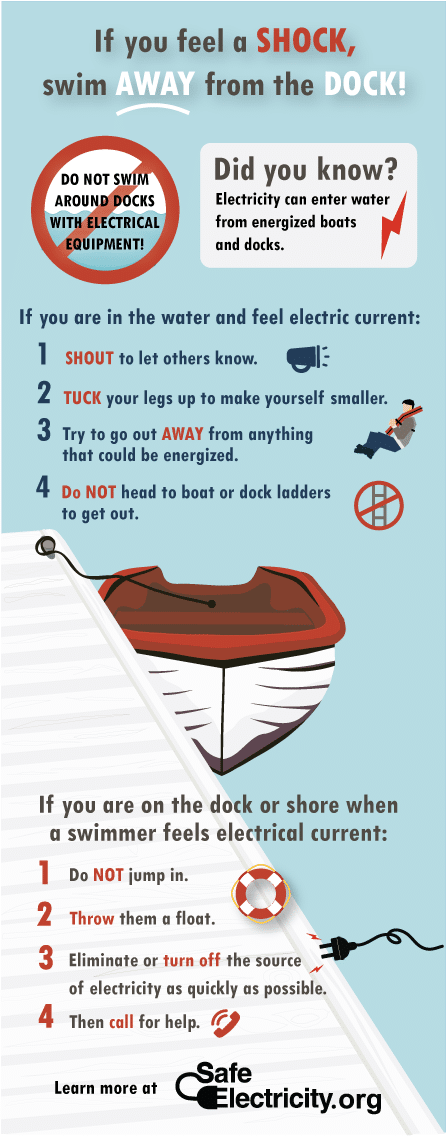
“If you feel a shock, swim away from the dock,” is a good thing to remember when swimming. Knowing what to do if water becomes electrified can help swimmers avoid an invisible hazard called electric shock drowning (ESD).
Outdated wiring and a lack of proper safety equipment on boats and docks can cause situations where electricity seeps or leaks into the water. It is a particularly dangerous hazard because it is impossible to tell by looking if water is energized. According to the Electric Shock Drowning Prevention Association, between 10 and 15 milliamps, which is just 1/50 the wattage of a 60-watt light bulb, can cause drowning. The association also reports that most ESD deaths have occurred in public and private marinas and docks.
Lowell Light & Power and Safe Electricity recommends that individuals do not swim around docks with electrical equipment or boats plugged into shore power. If you are in the water and feel electric current, there are a few things you should do: Shout to let others know. Try to stay upright. Tuck your legs up to make yourself smaller. Swim away from anything that could be energized. Do not swim to boat or dock ladders to get out.
If you see someone who you suspect is getting shocked, do not immediately jump in to save them. Throw them a float, turn off the shore power connection or unplug shore power cords. Try to eliminate the source of electricity as quickly as possible; then call 9-1-1 for help.
Steps for Enhancing Water Recreation Safety and Accident Prevention
Safe Electricity, along with the American Boat and Yacht Council (ABYC) and International Brotherhood of Electrical Workers/National Electrical Contractors Association, recommends adhering to these steps in order to enhance water recreation safety and accident prevention:
- All electrical installations and maintenance should be performed by a professional electrical contractor familiar with marine codes and standards. Inspections should be conducted at least once a year.
- Docks should have GFCI breakers on the circuits feeding electricity to the dock.
- The metal frame of docks should be bonded to connect all metal parts to the alternating current (AC) safety ground at the power source.
- Neighboring docks can also present a shock hazard. Make your neighbors aware of the need for safety inspections and maintenance. Marinas should comply with NFPA and NEC codes.
- Have your boat’s electrical system checked at least once a year. Boats should also be checked when something is added to or removed from their systems.
- Boats with AC systems should have isolation transformers or equipment leakage circuit interrupter (ELCI) protection, comply with ABYC standards and be serviced by an ABYC Certified® Technician.
The Ritz Family’s Story of Electric Shock Drowning
The Ritz family was devastated by the death of their son Lucas. He died while swimming with his life jacket on and being closely supervised by his mother. They couldn’t see the water was electrified. Later, they learned electricity was leaking into the water from a boat plugged in to shore power. Sadly, may lose their lives by what’s now known as electric shock drowning (ESD). The Ritz family wants others to learn how to avoid ESD and stay safe.
Watch Lucas’s story about Electric Shock Drowning and find additional safety resources from SafeElectricity.org.
For additional electrical safety tips, visit our Energy Saving & Safety Tips page.